Acoustic Design Solutions for Open Offices
Author
Priya Sharma
Published
26 April 2026
Read Time
6 min read
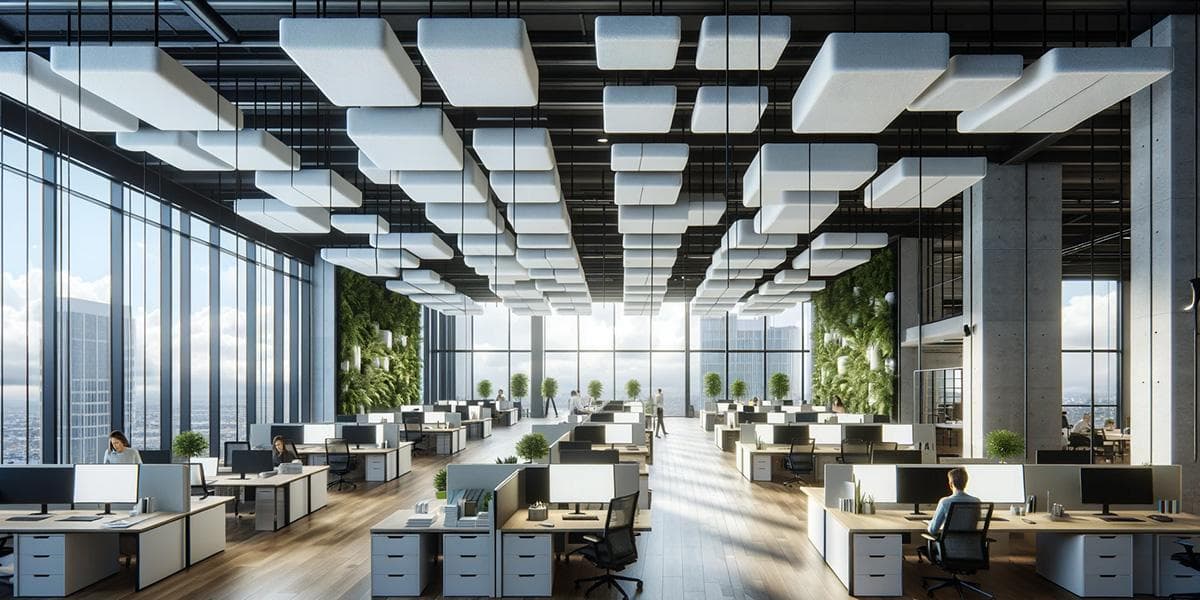
Open office layouts encourage collaboration, but they also introduce one major challenge noise. Constant conversations, phone calls, and background sounds can reduce concentration and impact productivity.
Acoustic design solutions help balance openness with focus, creating a workspace that supports both collaboration and quiet work.
Why noise is a problem in open offices
Open layouts remove physical barriers, allowing sound to travel freely
This leads to
• Frequent distractions
• Reduced concentration
• Increased stress levels
• Lower productivity
Managing sound is essential for a functional workspace.
Understanding acoustic design
Acoustic design focuses on controlling how sound behaves within a space
It involves reducing noise, absorbing sound, and preventing echo
The goal is not complete silence, but a balanced sound environment.
Sound absorption using panels
Acoustic panels are one of the most effective solutions
• Wall mounted panels absorb sound waves
• Ceiling panels reduce echo
• Fabric panels improve overall acoustics
These materials help control noise without major structural changes.
Ceiling treatments for better acoustics
Ceilings play a key role in sound control
• Acoustic ceiling tiles reduce sound reflection
• Baffles and clouds improve sound absorption
• Suspended panels control noise in large spaces
This is especially useful in high ceiling offices.
Flooring and soft materials
Hard surfaces reflect sound, increasing noise levels
Adding soft materials helps absorb sound
• Carpets and rugs
• Upholstered furniture
• Curtains or fabric elements
These reduce echo and improve comfort.
Partitioning for noise control
Strategic partitions help limit sound travel
• Glass partitions for visual openness
• Acoustic partitions for sound control
• Desk dividers for personal space
This creates zones without fully closing the space.
Acoustic pods and quiet zones
Dedicated quiet spaces are essential in open offices
• Acoustic pods for calls or focused work
• Private cabins for meetings
• Silent zones for deep work
These provide escape from noise when needed.
Layout planning and zoning
A well planned layout reduces noise naturally
• Separate collaborative and quiet areas
• Place meeting zones away from workstations
• Avoid overcrowding
Zoning ensures better sound distribution.
Technology based solutions
Modern offices use technology to improve acoustics
• Sound masking systems
• Noise control devices
• Smart acoustic panels
These systems create a more balanced sound environment.
Common mistakes to avoid
• Ignoring acoustics during design stage
• Using only hard surfaces
• Overcrowding workstations
• Lack of quiet zones
Avoiding these ensures effective noise management.
Benefits of good acoustic design
• Improved focus and productivity
• Reduced stress and fatigue
• Better communication clarity
• More comfortable work environment
Acoustic design directly impacts how employees perform and feel.
Final perspective
Acoustic design is a critical part of modern office planning. In open offices, managing noise is essential to maintain productivity and comfort.
By combining materials, layout strategies, and technology, businesses can create balanced workspaces that support both collaboration and concentration.